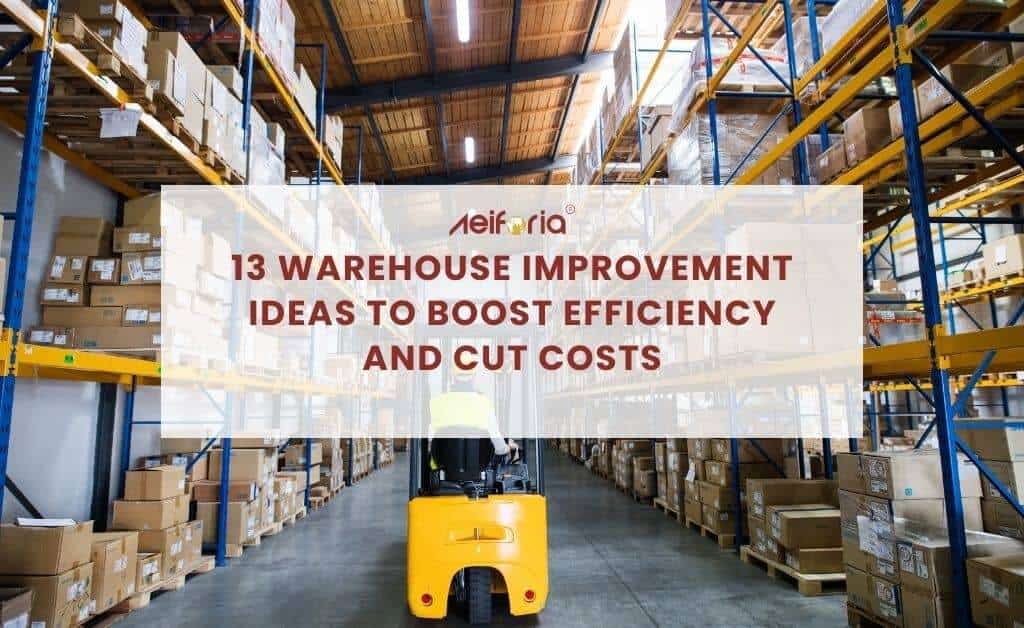

13 Warehouse Improvement Ideas to Boost Efficiency and Cut Costs
Businesses need to make their warehouses work as efficiently as possible. This helps them stay ahead of the competition, spend less money on running the warehouse, and make their customers happier. When warehouses work well, they can send out orders quickly, make fewer mistakes, and use the space and resources they have best. Here are thirteen ways to make your warehouse work better and spend less money.
Use a Warehouse Management System (WMS)
A Warehouse Management System (WMS) is a software tool that helps you keep track of products in a warehouse, fulfill orders, and ensure everything is running smoothly. Using a WMS can save time by allowing tasks to be done automatically and reducing errors. It gives you essential information about how much stock you have, the status of orders, and what's happening in the warehouse.
It also has features like scanning barcodes, tracking using RFID, entering data automatically, ensuring your records are accurate, and helping the warehouse work efficiently. Having a WMS can improve how well your warehouse runs, make it easier to keep customers happy and help you use your resources better.
Optimize Your Warehouse Layout
How your storage space is arranged affects how well things get done. A well-organized layout can make finding and moving items easier, save time, and avoid delays. Here's how:
- Use vertical space: Install tall racks to store items and maximize space. This not only increases storage capacity but also helps organize goods better.
- Create zones: Divide your warehouse into sections based on product type and the frequency of picks. This zoning strategy ensures that frequently picked items are easily accessible, reducing the time spent retrieving them.
- Streamline flow: Arrange goods to support a smooth workflow from receiving to shipping. Ensuring a logical sequence in the placement of goods minimizes unnecessary movement. It speeds up the entire process, leading to quicker order fulfillment.
Apply Lean Principles
Lean principles aim to reduce waste and make processes better. Here are some lean practices:
- 5S methodology: Sort, Set in order, Shine, Standardize, and Sustain to keep your workspace organized. This method creates a clean and efficient work environment, significantly reducing time wastage and improving productivity.
- Continuous improvement: Encourage employees to suggest ways to improve processes. Regular feedback and suggestions from staff can lead to innovative solutions and process enhancements.
- Just-in-time (JIT): Remember to only order things when you really need them. This helps avoid having too much stuff in storage, saves money on storage space, and ensures everything is used best. Using lean principles enables you to make your warehouse more flexible and able to react quickly when things change.
Invest in Automation
Automation can make your warehouse more efficient by reducing manual labor and errors. Consider these technologies:
- Automated guided vehicles (AGVs): AGVs move goods around the warehouse. They can operate continuously without breaking, ensuring a steady flow of materials.
- Conveyor systems: Implement conveyors to transport items between areas. This speeds up the movement of goods and reduces the physical strain on employees.
- Robotic picking systems: Using robots to help organize and send orders can speed up processes and prevent mistakes. The robots can do simple jobs, so people can spend their time on more complicated things. When a business uses this technology, it can get things done better and faster, making customers happier and decreasing costs.
Improve Inventory Management
Good inventory management is critical to warehouse efficiency. Here are some tips:
- ABC analysis: It's essential to focus on the items in your inventory that are really important and sell quickly. This way, you can concentrate on the things that bring in the most money.
- Cycle counting: It's essential to regularly count small amounts of inventory to ensure the records are accurate. By doing this regularly, we can always keep track of what we have, which helps us avoid mistakes and keep everything up to date.
- Reorder points: Remember to set levels for reordering items before you run out. This will avoid running out of stock and ensure you always have the proper inventory. Good inventory management helps reduce storage costs, improve order fulfillment rates, and make your warehouse more efficient.
Train and Engage Employees
Ensuring your employees are well-trained and happy in their jobs is essential. Train them well on how to work in the warehouse and how to stay safe. Please encourage them to keep learning and getting better at their jobs. Also, make sure they feel good about coming to work and let them know when they're doing a good job.
When employees care about their work, they're more likely to take responsibility, suggest good ideas, and work well together. When you invest in your employees, your business runs better, and you keep good people around for longer.
Use Data and Analytics
Understanding how well your warehouse is doing and where it can improve can be done by looking at the information it generates. Keeping an eye on how often orders are filled correctly, how long it takes to pick items, and how quickly inventory moves can give you important clues.
Using this data, you can make intelligent choices and find ways to improve things. Tools that help with analysis can show you where things are getting held up, help you guess how much of something you'll need, and ensure you're using your resources as best as possible.
By regularly checking in on this information, you can keep improving your warehouse and be ready for any potential problems. Using what the data tells you can allow you to make changes ahead of time, make things work better, and stop spending as much money.
Streamline Picking and Packing
The process of picking and packing is a crucial aspect of warehouse operations. Streamlining these processes can lead to faster order fulfillment and reduced errors. Consider the following strategies:
- Batch picking: Group similar orders together to reduce travel time and increase picking efficiency. This method minimizes the distance pickers need to travel, speeding up the picking process.
- Pick-to-light systems: Use lights to show pickers where to find things so they can find them faster and more accurately. This helps speed up the process of picking items by making it clear where everything is.
- Packing stations: To make packing easier, create specific packing areas with all the necessary stuff. Having these organized spaces will help you find everything quickly and pack faster.
Implement Cross-Docking
Cross-docking is all about efficiency in moving goods. Instead of storing things in a warehouse, incoming items go straight to outbound transportation. This helps to save time and money, leading to quicker deliveries and lower costs. It's convenient for things that move fast, reducing the need to store and handle items.
Maintain Equipment Regularly
Taking care of the equipment and machines in a warehouse is really important. Regular maintenance and check-ups can ensure that everything runs smoothly and doesn't break down. This can help avoid big problems and keep the warehouse working well. Plus, it can save us money by preventing expensive repairs.
Adopt Energy-Efficient Practices
Reducing energy usage in your warehouse can result in significant cost savings and help achieve sustainability targets. Implement energy-efficient practices such as:
- LED lighting: Consider swapping out your regular light bulbs for LED ones. LED bulbs use less energy, which can help reduce your utility costs. LED lights last a long time and use less energy, saving you money in the long run.
- Motion sensors: Add motion sensors to control the lights and heating/cooling systems so they only turn on when someone is around and needed. This can reduce energy waste and lower operating costs.
- Energy audits: It's essential to regularly check how you use energy to see where you can save. By finding and fixing things that waste energy, you can use less and spend less. Also, be sure to make things safer.
Enhance Safety Measures
Improving safety in the warehouse protects employees and reduces accidents, directly impacting efficiency. Here are some steps:
- Safety training: Remember to ensure your employees receive regular safety training on staying safe and what to do in an emergency. Employees who know how to keep safe are less likely to have accidents.
- Safety equipment: Ensure all workers can wear hard hats, gloves, and safety harnesses. Having the right gear can help avoid injuries and make things safer for everyone.
- Hazard identification: Check the warehouse often to find and fix anything dangerous. Preventing problems before they cause accidents will make the warehouse a safer place to work.
Improve Communication and Collaboration
Good communication and teamwork are vital for smooth warehouse operations. Implement strategies to enhance communication, such as:
- Team meetings: Remember to have scheduled team meetings to discuss goals, problems, and how things are going. These meetings are an excellent time to discuss issues, share news, and work together.
- Communication tools: Try using instant messaging and collaborative software to talk to each other in real time. This can help everyone stay updated and solve problems faster.
- Feedback mechanisms: Encourage employees to provide feedback and suggestions for improvement. Listening to employees' ideas can lead to valuable insights and foster a culture of continuous improvement.
Conclusion
Improving how a warehouse works is an ongoing process that involves careful planning, using new technologies, and working together as a team. By implementing these thirteen ideas, you can make your warehouse run better, spend less money, and make customers happier.
Keep checking how things are done to find new ways to improve them. A well-organized and efficient warehouse is essential for doing well in today's fast-moving business world. By constantly trying to improve things and using the best ways of doing things, you can ensure your warehouse stays strong and can handle the changing business needs.